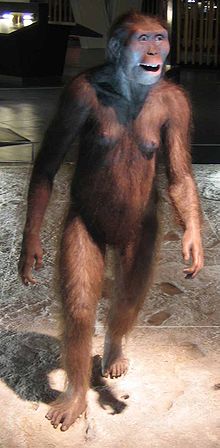
The topic of Evolution vs. Creationism has long stirred up strong opinions—and for good reason. It's not just a matter of science, but one that touches on worldview, belief, and even politics.
When we look at this debate from a scientific perspective, an honest thinker must be willing to consider both sides. After all, when it comes to the big questions—like how we got here—satisfactory answers are few and far between.
🧠 Curiosity and the Human Condition
Regardless of one's stance, we’re here, and we’re curious. Our desire to understand where we came from is a natural part of being human.
-
To the atheist, evolution is the only game in town—so it must be defended fiercely.
-
To the believer, creation is the clear answer—so evolution is often rejected completely.
But rarely is any subject so black and white.
🌍 Origins: A Political Battlefield
🏛️ Not Just a Scientific Debate
The debate over origins has shifted from the lab to the courtroom, the classroom, and even political platforms. According to Wikipedia, the Creation-Evolution Controversy is most publicly debated in the United States.
They even go as far as to state that evolution is an undisputed fact—but is that not a bit presumptuous?
There are multiple types of evolution—and not all are equally supported by scientific observation.
🔬 Evolution in Practice: What We Know
Some forms of microevolution (small changes within species) are well-documented and observable. But even here, conclusions are often stretched beyond what the evidence supports.
✅ Examples of Microevolution:
-
Escherichia coli (E. coli)
-
Since 1998, 12 populations have undergone hundreds of millions of mutations over 20,000 generations.
-
Result: Increase in cell size and rounded shape.
-
Yet... it's still E. coli.
-
Italian Wall Lizard
-
Transported from Kopiste to Mrcara Island.
-
After decades: Longer limbs, foraging adaptations.
-
Yet... still lizards.
These changes are interesting, but they don’t explain origins. They show variation, not transformation from one kind of organism to another.
Escherichia coli (E. coli)
-
Since 1998, 12 populations have undergone hundreds of millions of mutations over 20,000 generations.
-
Result: Increase in cell size and rounded shape.
-
Yet... it's still E. coli.
Italian Wall Lizard
-
Transported from Kopiste to Mrcara Island.
-
After decades: Longer limbs, foraging adaptations.
-
Yet... still lizards.
These changes are interesting, but they don’t explain origins. They show variation, not transformation from one kind of organism to another.
🧪 Types of Evolution: Observed or Not?
Let’s take a closer look at the different categories of evolution, and whether they’ve been scientifically observed or tested.
| Type of Evolution | Observed? | Repeated? | Tested? |
|---|---|---|---|
| 1. Cosmic Evolution | ❌ | ❌ | ❌ |
| 2. Chemical Evolution | ❌ | ❌ | ❌ |
| 3. Stellar Evolution | ❌ | ❌ | ❌ |
| 4. Organic Evolution | ❌ | ❌ | ❌ |
| 5. Macro-Evolution | ❌ | ❌ | ❌ |
| 6. Micro-Evolution | ✅ | ✅ | ✅ |
Only microevolution fits within the strict criteria of science: observation, repetition, and testability.
🤔 So What’s the Conclusion?
Microevolution is real, but it doesn’t answer the bigger questions—like the origin of life, consciousness, or the universe itself.
-
If evolution is claimed as a fact, then it must be defined properly.
-
If it’s macro or cosmic evolution, then we’re talking about things that have never been observed or repeated.
-
If it’s microevolution, then it's simply adaptation within limits—not proof of universal origins.
In the end, we must be careful not to confuse scientific imagination with scientific fact.